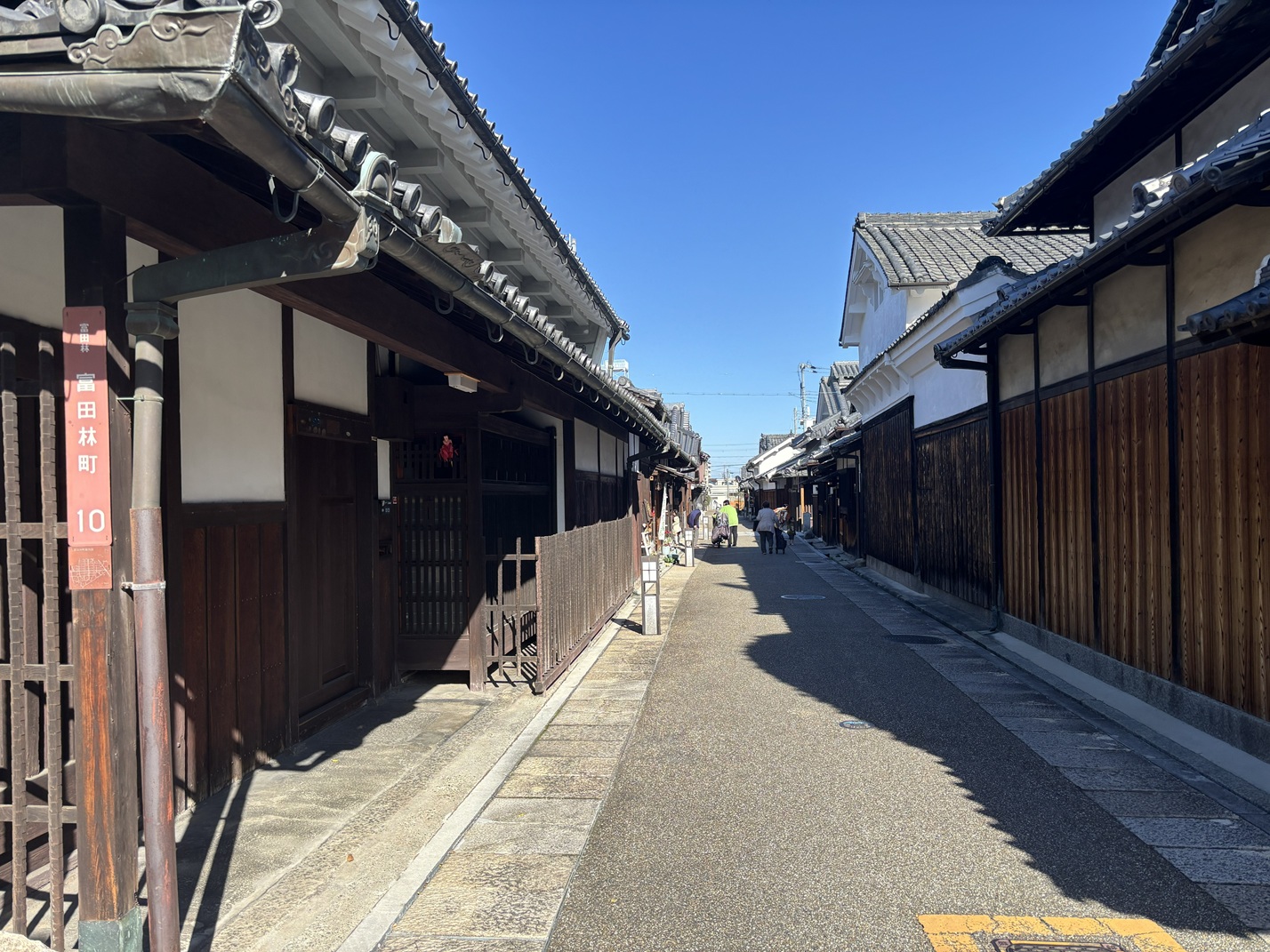
First, what exactly is a Jinai-machi? Simply put, it refers to autonomous cities formed around temples during the Warring States period. Jinai-machi that still retain their original appearance are scattered throughout Japan.
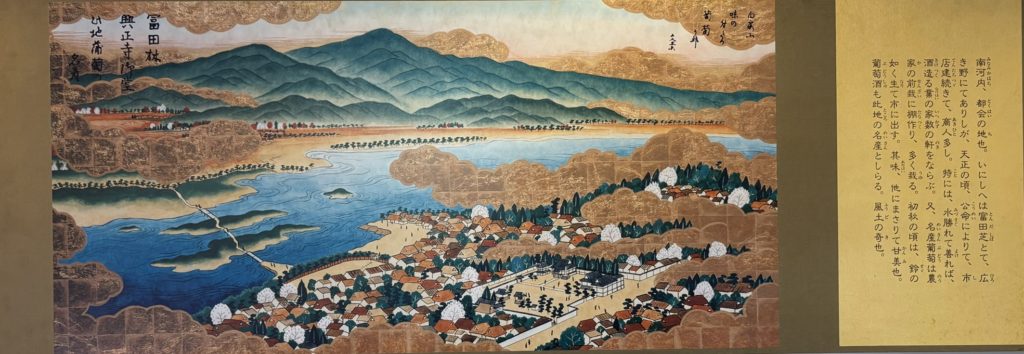
Historically, these Jinai-machi developed in regions where the feudal lord’s control was weak. Temples became the town’s nucleus; people gathered there, markets formed, and to sustain that market economy and protect themselves, moats and earthen ramparts were built around the town.Jinai-machi are communities where religious teachings unite people and govern the town under unique rules. In a sense, they could be called religious cities.
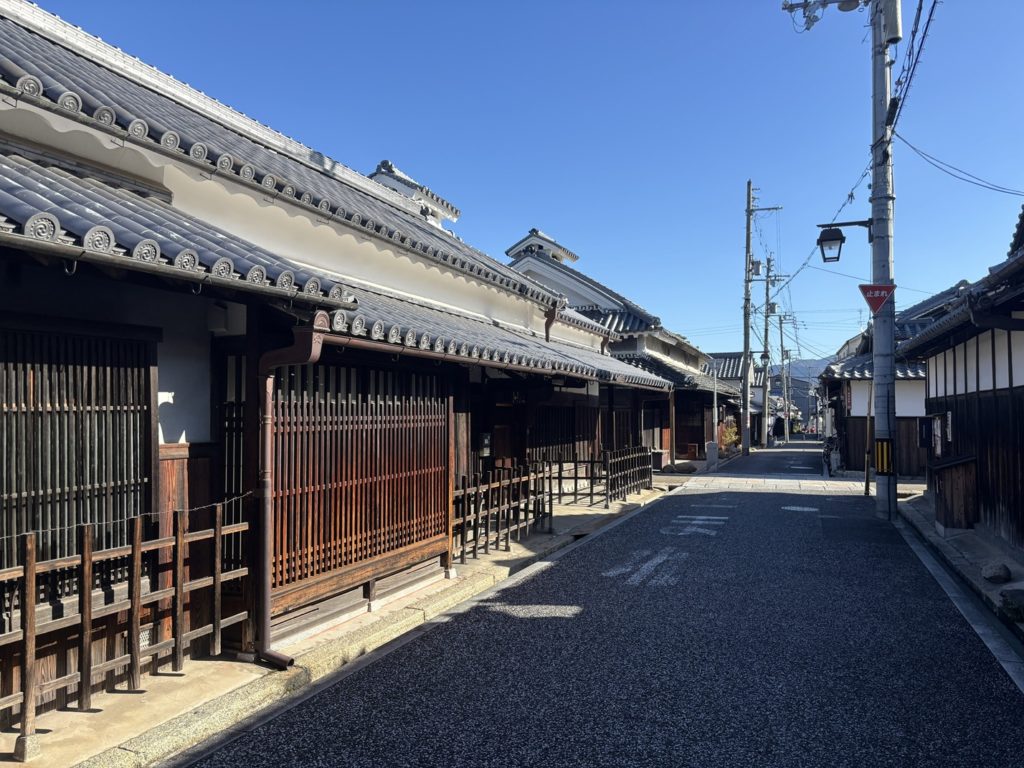
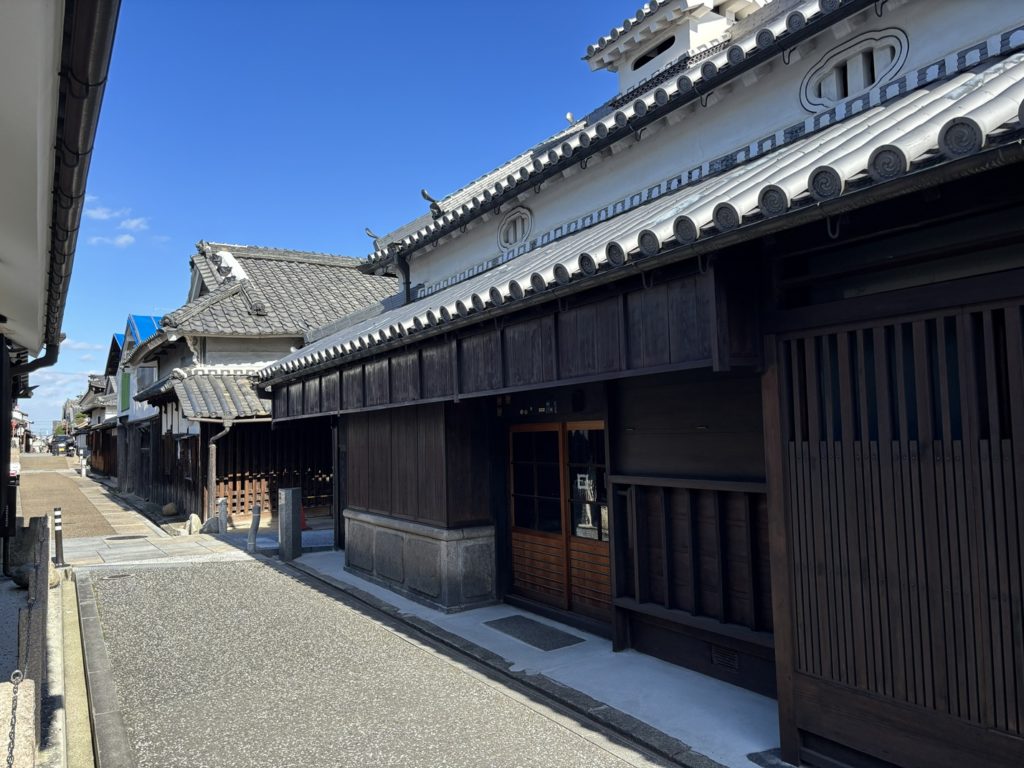
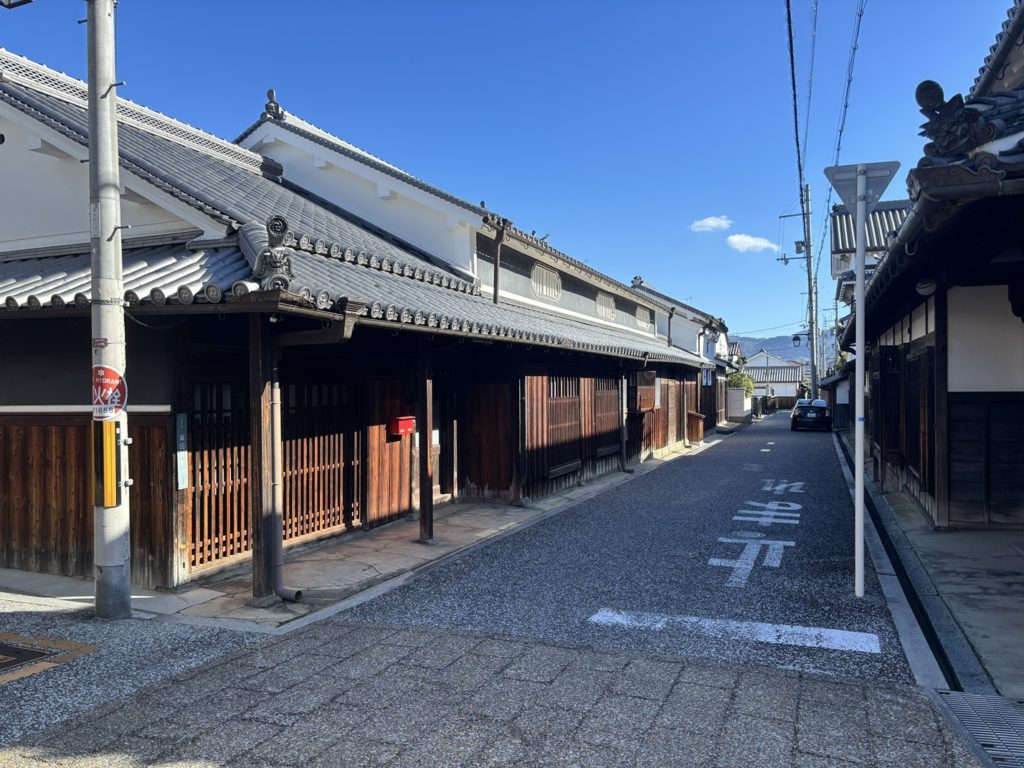
Now, Tondabayashi Jinai-machi also developed as a Jinai-machi after Kosho-ji Temple (established as a branch temple of Kyoto’s Kosho-ji Temple) was built along the banks of the Ishi-kawa River in Minami-Kawachi during the mid-16th century Sengoku period.During its initial development, it appears the outer perimeter featured earthen ramparts and moats.The town had four entrances and exits, which were closed at night to maintain public order.
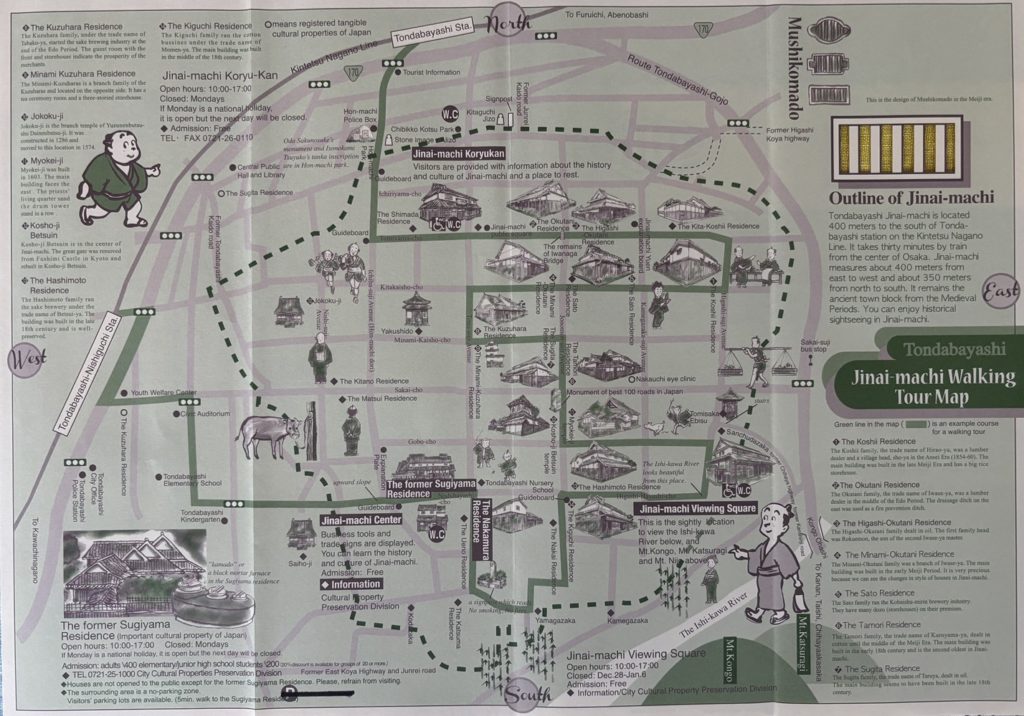
The town, centered around Kosho-ji Temple, measured approximately 470 meters east-west and 400 meters north-south, roughly corresponding to present-day Tondabayashi-cho.The town’s layout still retains its original form today. Features designed for defense—intersections deliberately obstructed for poor visibility, fire-prevention waterways, and fragmentary earthen rampart remains—preserve the town’s historical character.
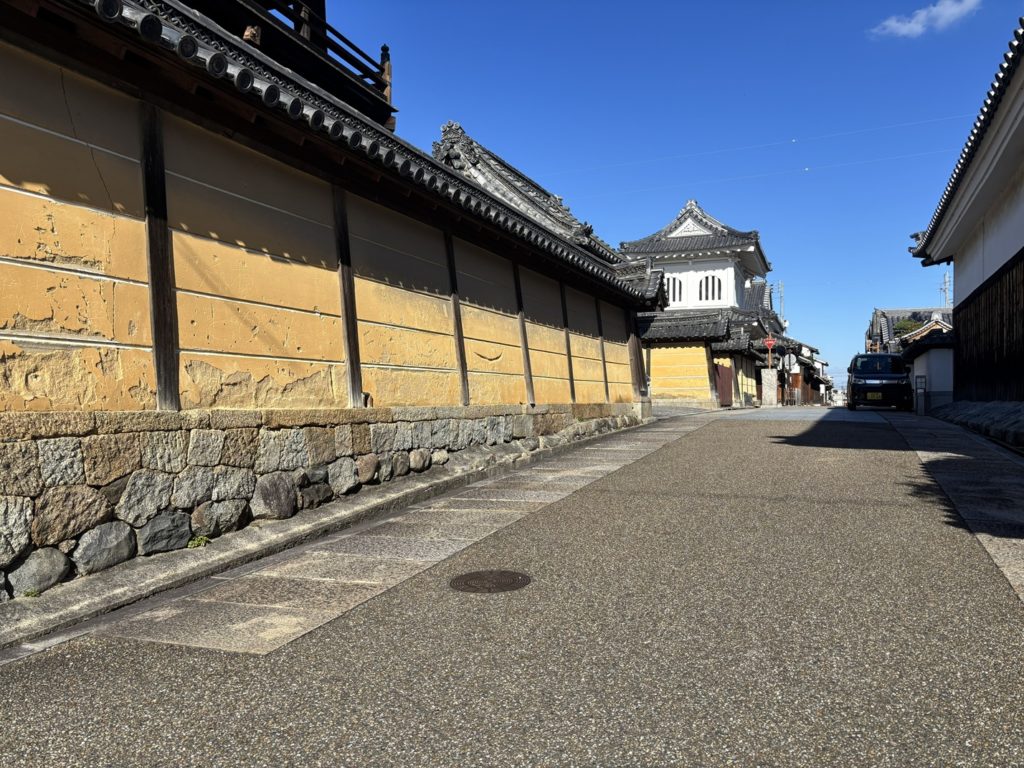
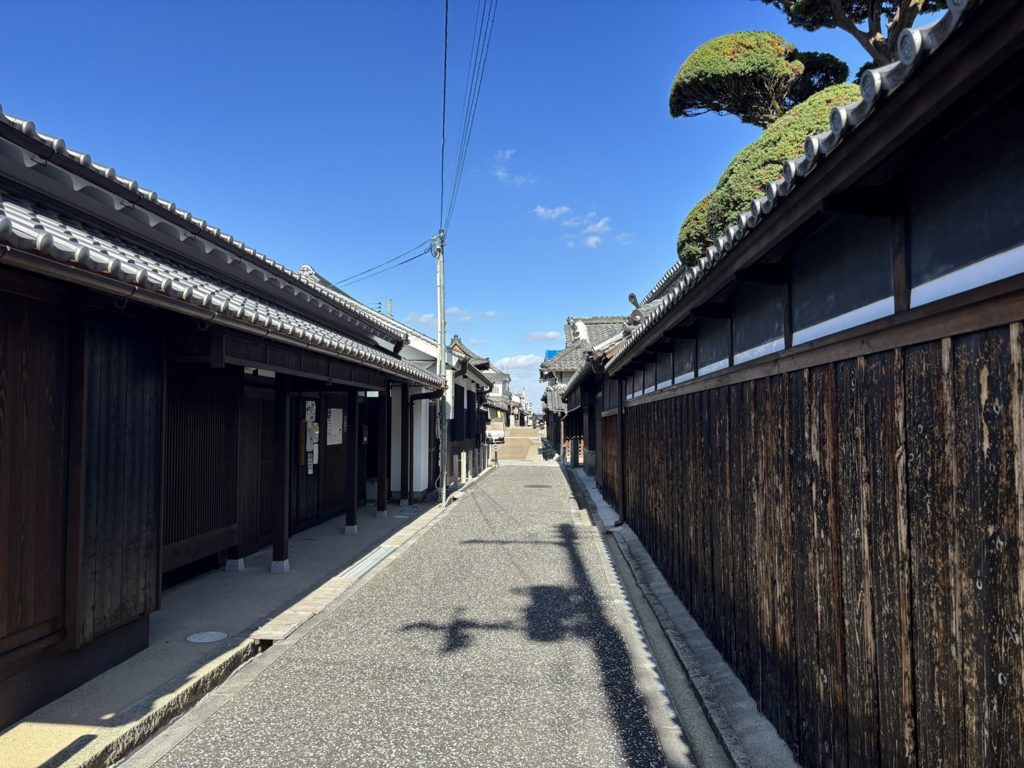
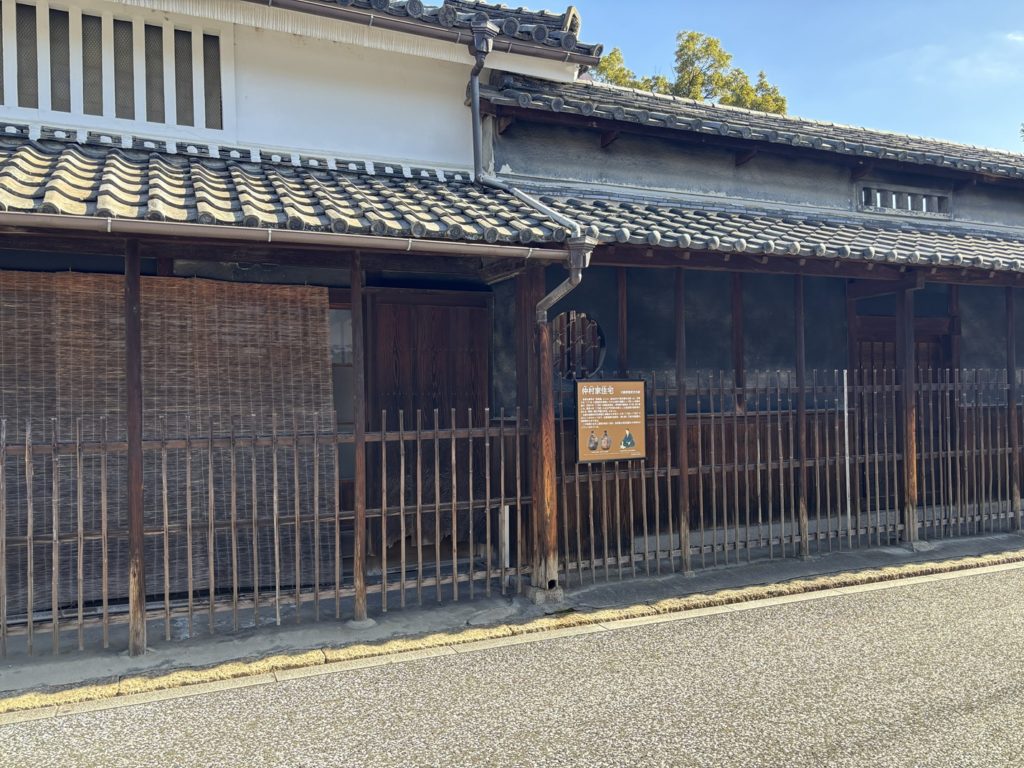
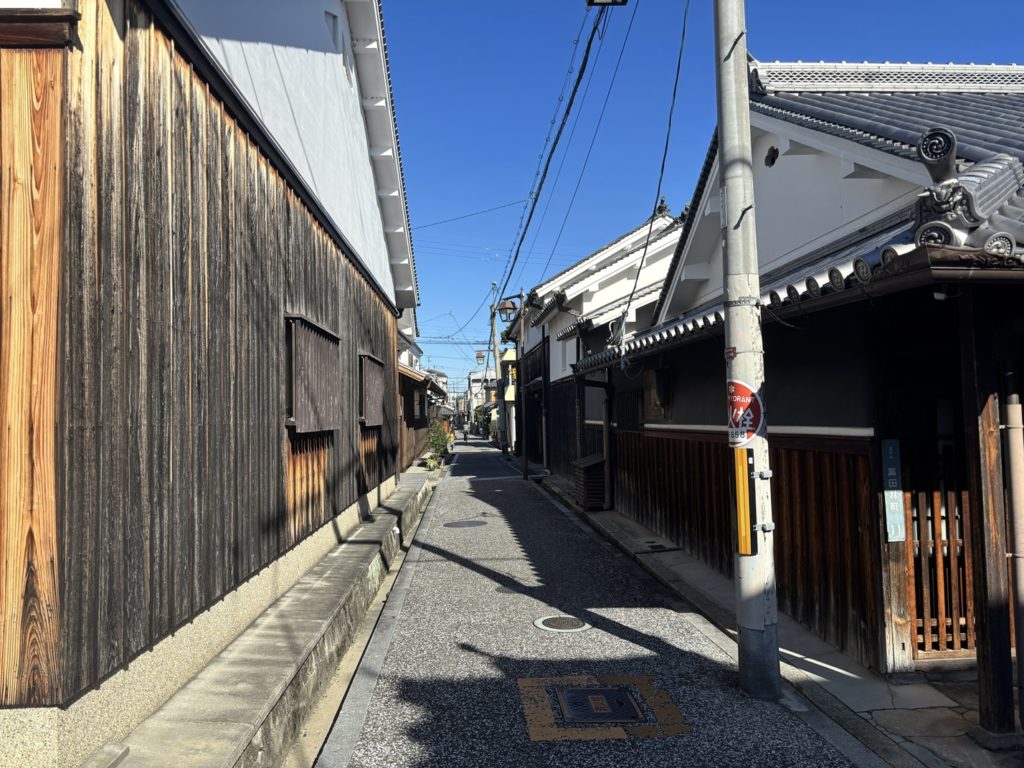
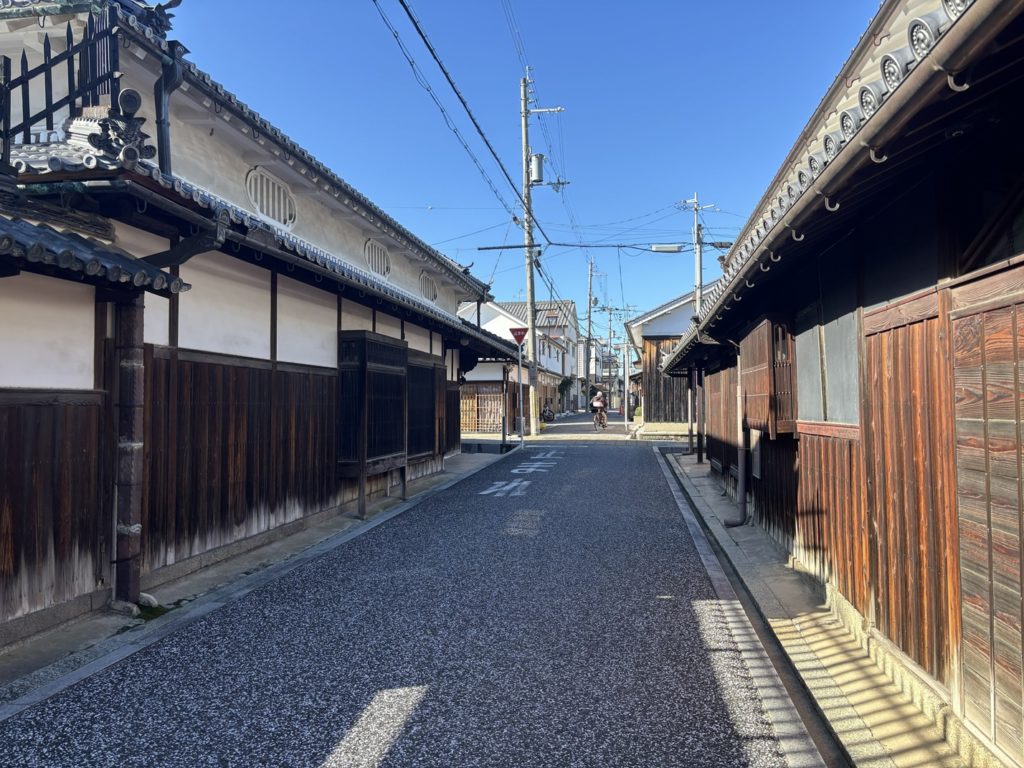
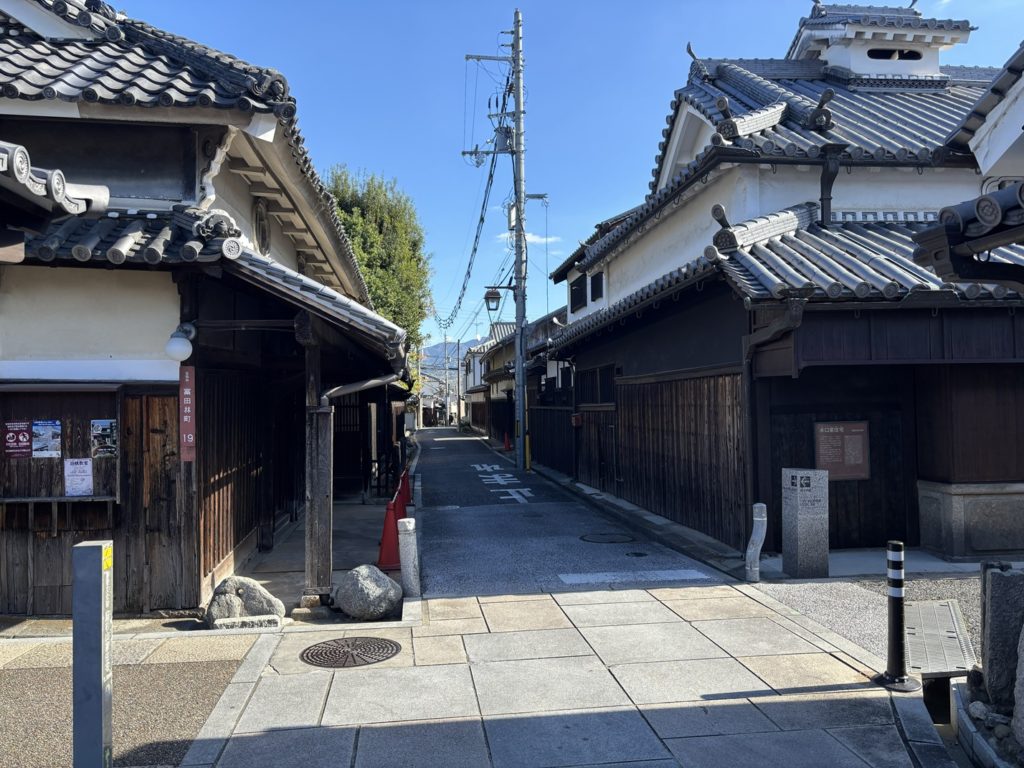
According to records from the late 17th century during the Edo period, trade in barrels, cloth, sake brewing, and cotton flourished, with about 150 shops lining the streets.
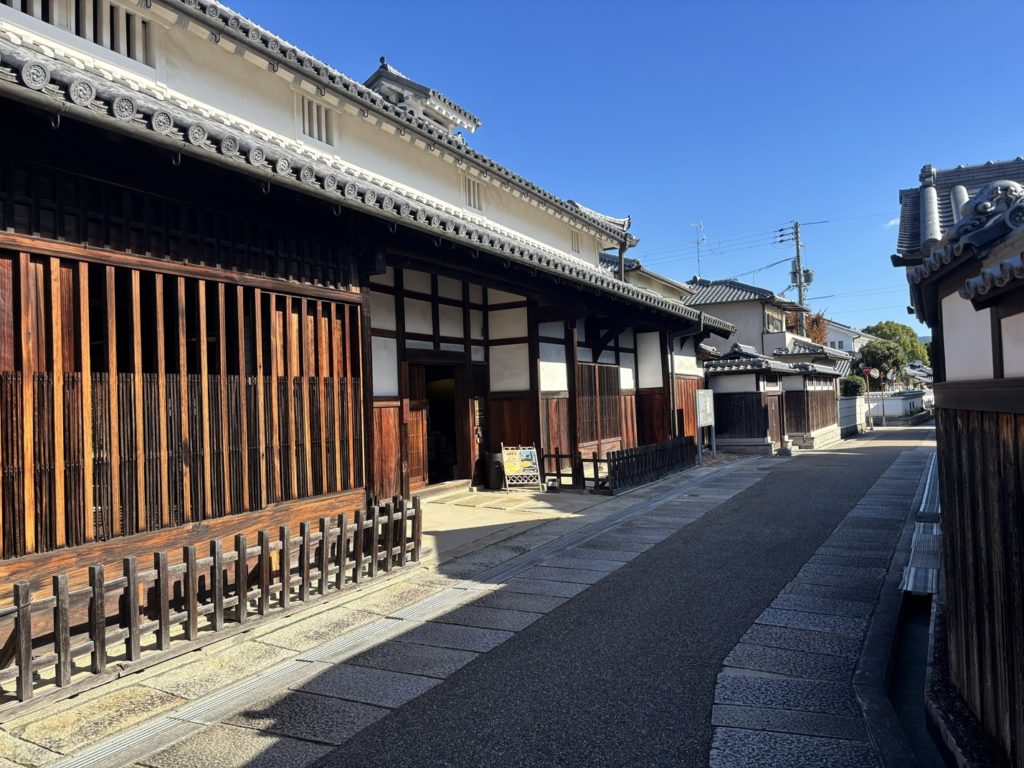
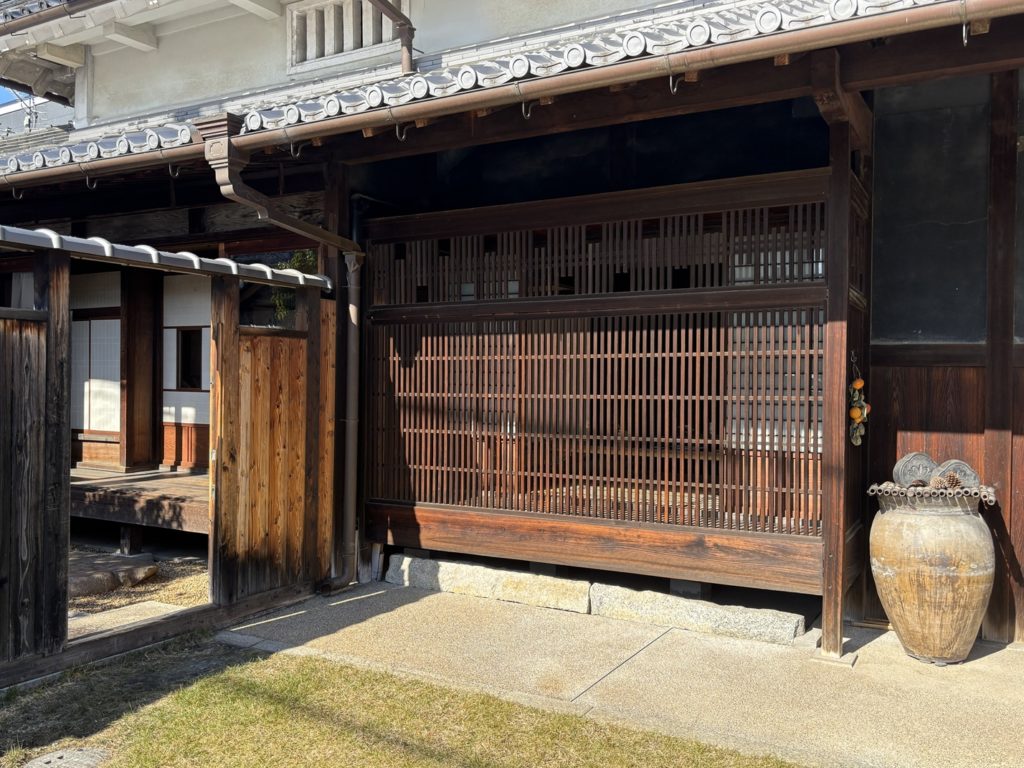
It also appears to have served as a distribution center for agricultural products from the surrounding regions.Walking through the neighborhood, you can clearly see that while some areas have transformed into modern homes, traditional Japanese architecture and streetscapes remain, preserving the charm of days gone by.
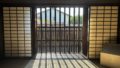
There are two traditional buildings open for viewing. One of them is the Former Sugiyama Family Residence.The former Sugiyama family, who made their fortune in sake brewing, is an old family dating back to the founding of Jinai-machi. This building is a splendid residence that provides a good insight into life in those days.The other is the Former Tanaka Family Residence. While not a mansion, it is an excellent example of a Meiji-period (1868-1912) farmhouse built in 1892. Be sure to stop by these two residences.
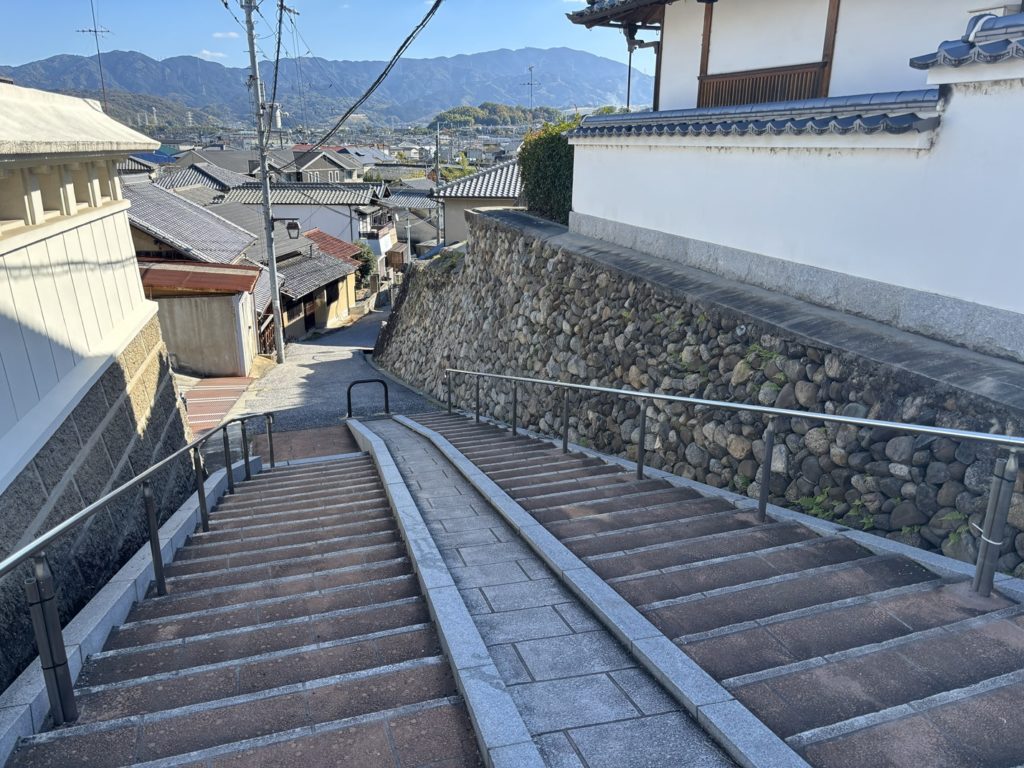
Descending the slopes that still remain as entrances to the Jinai-machi—Kamega-zaka and Sanchuda-zaka—leads you to the riverbed.I imagine that in the old days, the Ishi-kawa River likely extended this far.Using this river, agricultural products from the surrounding areas were gathered, and goods produced within the Jinai-machi were transported by boat.
Incidentally, three mountains can be seen from this riverbank.In the distance to the left is Mt. Nijo (Nijo-san,approx. 520m), while directly ahead, to the left is Mt. Yamato-Katsuragi (Yamato-Katsuragi-san,approx. 960m) and to the right is Mt. Kongo (Kongo-san,approx. 1100m). Crossing any of these mountains will take you into Nara Prefecture.
To reach Jinai-machi in Tondabayashi.
Take the Semi-Express train from Kintetsu Minami-Osaka Line’s Osaka Abenobashi Station to Tondabayashi Station, approximately 30 minutes. From the station, it’s about a 5-minute walk to the Jinai-machi area. Osaka Abenobashi Station is located beneath Abeno Harukas in Tennoji.

Comment