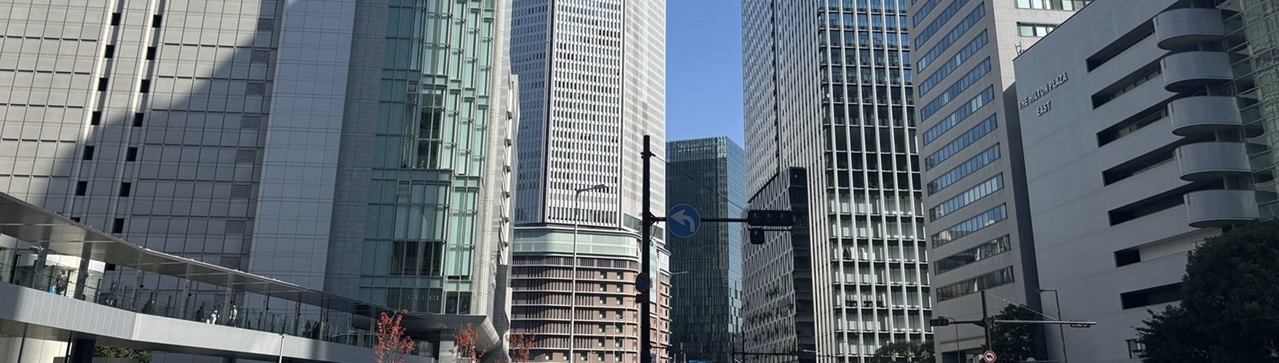
Osaka City is the second largest city after Tokyo. Osaka City is divided into two main areas: Kita, centered around JR Osaka Station and Hankyu Railway’s Osaka-Umeda Station; and Minami, centered around Nankai Railway’s Namba Station and the Dotonbori/Shinsaibashi area famous for the Glico sign.Kita means “north” in Japanese, while Minami means “south.” Each is a major commercial district with expansive downtown areas.
Recently, development has centered around Osaka-jo Castle in Higashi (meaning “east” in Japanese), but when it comes to Osaka’s entertainment districts, Kita and Minami are the main areas.Heading west from central Osaka brings you to Osaka Bay.This bay area is home to attractions like Universal Studios Japan and Kaiyukan Aquarium.The central districts of Yodoyabashi and Honmachi are business districts, yet they still feature scattered old Western-style buildings. Midosuji Avenue, running north-south, transforms into a stylish street in winter when its ginkgo tree-lined avenue is illuminated.
The city of Osaka, with its large river flowing through the urban area and connecting to the sea,developed into a major commercial and economic hub during the Edo period(1603-1868).Goods transported up the river from the sea were carried throughout the city using its many canals (moats). That city is the current Senba district, centered around Yodoyabashi and Honmachi.Only the Dotonbori and Higashiyokobori rivers remain of those canals (moats) today; all others have been filled in.Goods brought into the city came from various domains and were sold throughout Japan from Osaka.Many domain storehouses (kura-yashiki) for temporary storage of these goods were built along these rivers and on Nakanoshima, but none remain today.
As a logistics hub, Osaka gathered vast quantities of food, earning it the title of “Kitchen of the Nation”(Tenka no Daidokoro) during that era.This historical legacy is why Osaka is still known today as a city of food. It’s a place where you can eat delicious food, and at affordable prices. This remains a defining characteristic of Osaka, passed down through tradition.
From the late Meiji era (1868-1912) through the early Showa era (1926-1989), Osaka developed into a city of modernizing industry and economy.Perhaps because of this, you won’t find many quintessentially Japanese scenes like those foreign tourists might expect in Kyoto.There are hardly any traditional townhouses (machiya) left in the city. However, an exciting city where you can savor Osaka’s food culture spreads out before you. This is its greatest charm, something Kyoto or Nara simply don’t have.
The main transportation options within Osaka City are the Osaka Metro subway and the JR Osaka Loop Line.These two systems can take you to most tourist spots. Of course, city buses also run, but unlike in Kyoto, you rarely need to use city buses to reach tourist destinations.To travel from Osaka City to Kyoto or Kobe, you can take the JR or Hankyu Railway from the Kita area. If you want to go to Nara, Ise, or Wakayama, you can take the Kintetsu Railway or Nankai Railway from the Minami area.